

Beliefs & Assumptions - glasses through which we see the world
Updated: Jun 29, 2025
One of the most powerful forms of inner work we can do — as leaders, professionals, or simply as people — is to examine and reframe our internal beliefs.
What are Beliefs?
Put simply, these are concepts, statements or ideas that we take as given. They form the basis of how we think, decide, act, and interact with the world. They become threads woven into our internal fabric, making a mark on every choice we make.
Where do Beliefs come from?
An infant comes into the world without much tint to its vision. But as the child grows up, its environment, upbringing, cultural context, education, learning and experiences all slowly start conditioning that young mind. Notions start getting formed, values get crystallised, and slowly, mostly unconsciously and invisibly, beliefs and assumptions start making room for themselves in the mind. Over time, they are just taken by the individual as the truth, though they are merely interpretations (sometimes shockingly poor ones) of reality or facts. They fade into the background of consciousness and become invisible to us - no longer noticed, yet still very much active. Just like glasses we are wearing but have forgotten about, they influence our vision of the world. We no longer see them, we see through them.
What about Beliefs, then?
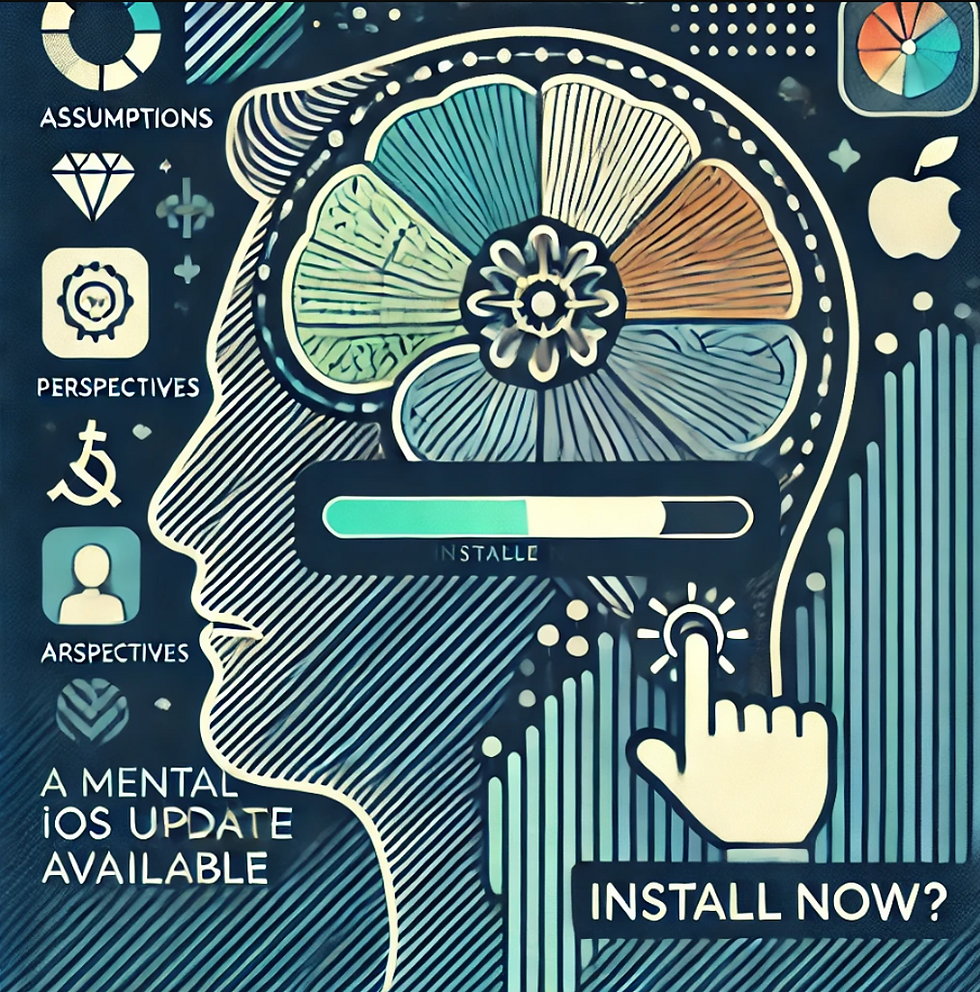
Well, as said already, beliefs may not always be true reflections of reality or our values. Because of the way they stealthily sneak in and then rule our mind, they often have never been analysed or challenged. Some of them may be helpful but some may actually be limiting, hampering us or even harming us. Some may have been beneficial at some point, but are no longer so, because of change of context. Whatever be the case, given the unbridled power they hold on our psyche, they need to be reviewed from time to time, to assess their relevance, their impact and their need for evolution. Like I always say, our Inner Operating System (IOS) needs to be updated from time to time. Reviewing beliefs is a big part of this update.
Reframing Beliefs
When beliefs, especially unconscious ones, come into awareness and under review, what comes about is a moment of truth when we come face-to-face with those glasses which were in our eyes, for us to assess:
Is this belief true?
Is it helpful to me in the life and leadership I want to build?
Does it align with who I am today and who I want to be (vs who I once was)?
Do I really need it at all? Or may be need it with a slightly different tint?
This reflection often points to a need for change – to help the belief evolve, just like we have evolved and are evolving.
Reframing does not mean changing it beyond identification, or rejecting everything about it. That would be like throwing the baby out with the bath water! Often beliefs contain our values, important lessons of life and just a part of who we are. We need those parts, we would not want to discard them. Reframing therefore, merely means consciously choosing how we keep them with us, changing how we relate to them. Keeping the parts that empower us in a way that they can help us, we let go of the parts that no longer serve us or are no longer relevant. In so doing, we are careful to do it in a way that is in sync with who we are, with our values, so that the core is left intact and untouched, when going through this important step in evolution.
That’s how we replace limiting beliefs with more enabling, growth-oriented ones. It is a simple step but a profound concept that can unlock tremendous clarity and energy.
A one-time effort?
This work on beliefs is not a one-time effort. It needs to be done continually, every once in a while. As context changes, situations change, and the person evolves, the frames in which beliefs are set need to be refurbished, just like the OS in a device has to be updated frequently. As a leader, reframing belief should be considered an ongoing leadership practice. It needs a leader to pause, reflect and explore their inner workings. While this work can be done by a person on their own, a personal coach can greatly enhance and accelerate the process as well as the final outcome.
Reframing in Practice
Helping coachees identify limiting beliefs and put them into new empowering reframes is a key part of the work coaches do. When beliefs shift, behaviours shift. And the shift often unlocks impact at a level never seen before, unveiling a path to growth towards potential.
As a coach, witnessing this transformation is beyond fascinating, getting to be a part of the journey an incredible privilege, and being the facilitator of the process a humbling responsibility.
If this resonates with you, stay tuned – in this space, I will share real-life stories of reframing of beliefs in upcoming posts.
If you’d like to explore how this work could support you or your teams, feel free to get in touch.
✨ Illume.Insight.Inspire. ✨

Comments